
Eternal Friendship On Our Sin-Shaped Journey
Jacob arrived at the well in Haran exhausted, alone, and still running on self-reliance. He had manipulated his way through life, bargaining even with God at Bethel: “If You will be with me… then the Lord shall be my God” (Genesis 28:20–21). At the well he saw Rachel, “pounced” in impulsive affection, and immediately began working to win her—seven years that felt like a few days because of love (Genesis 29:20). Yet even here, his path was shaped by haste, calculation, and the deceit of others. Laban tricked him, forcing another seven years of labor. Sin distorted relationships, turning family into rivals and love into a transaction.
God sovereignly ruled over Jacob’s sin-shaped journey. He did not abandon the deceiver; instead, He used Laban’s deception to discipline Jacob and advance His redemptive plan. As Cory’s sermon reminds us, God weaves even our flawed choices and the sins of others into His unthwartable purpose—the glory of His Son through the redemption and sanctification of His people.
Jacob’s story exposes our tendency to walk self-directed paths. We bargain with God, rush ahead, and treat relationships transactionally, much like Jacob treated both God and Rachel. Proverbs 14:12 warns, “There is a way that seems right to a man, but its end is the way of death.” Left to ourselves, we build lonely ladders and chase wells that cannot satisfy what we truly desire.
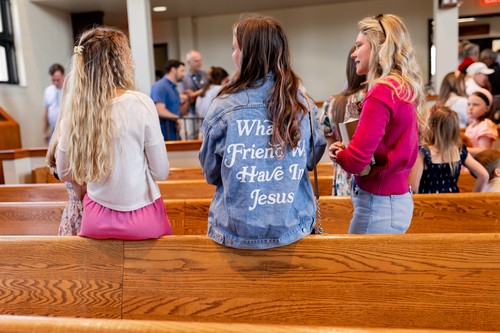
This is why biblical friendship is such a profound grace! Biblical friendship is “an affectionate and eternal bond forged between two or more people as they journey through life together with openness and trust for the glory of God.” Because it is eternal, it can only exist between believers—those whose souls are knit together in Christ, like David and Jonathan. Unlike Jacob’s conditional vows or calculated labor, true friendship offers faithful presence, honest counsel, and mutual sharpening (Proverbs 27:17). It calls us from peacekeepers who avoid truth to keep surface peace to peacemakers speaking truth in love for long-term sanctification!
The Holy Spirit most often changes us not in isolation, but through the grace of these Christ-centered friendships within the household of faith (Galatians 6:10). A faithful friend can confront our self-reliance, remind us of God’s sovereignty in our failures, and point us back to Jesus—the greatest Friend who laid down His life for us (John 15:13). Jesus never bargains; He gives unconditional grace and invites us into His eternal family.
If you are a covenant member of our Grace Fellowship family, this means you are obligated to hold a place of faithful friendship for all the other members, even the ones you have yet to meet. That’s what it means to BELONG to the Body of Christ. “You are not your own. You were bought with a price” (1 Cor 6:19-20).
Today, open yourself to biblical friendship with the GFC family. These relationships are eternal! Like a dad bragging on his son’s baseball stats, let’s hold a bias for our church family, “regarding one another as more important than ourselves” (Phil 2:3) and living vicariously through the blessings and steadfastly through the sufferings of our eternal brothers and sisters. I believe that by doing this, we will discover the same God who redeemed Jacob’s messy journey is still sovereignly at work through us who love him and are called according to His purpose (Rom 8:28).
God sovereignly ruled over Jacob’s sin-shaped journey. He did not abandon the deceiver; instead, He used Laban’s deception to discipline Jacob and advance His redemptive plan. As Cory’s sermon reminds us, God weaves even our flawed choices and the sins of others into His unthwartable purpose—the glory of His Son through the redemption and sanctification of His people.
Jacob’s story exposes our tendency to walk self-directed paths. We bargain with God, rush ahead, and treat relationships transactionally, much like Jacob treated both God and Rachel. Proverbs 14:12 warns, “There is a way that seems right to a man, but its end is the way of death.” Left to ourselves, we build lonely ladders and chase wells that cannot satisfy what we truly desire.
This is why biblical friendship is such a profound grace! Biblical friendship is “an affectionate and eternal bond forged between two or more people as they journey through life together with openness and trust for the glory of God.” Because it is eternal, it can only exist between believers—those whose souls are knit together in Christ, like David and Jonathan. Unlike Jacob’s conditional vows or calculated labor, true friendship offers faithful presence, honest counsel, and mutual sharpening (Proverbs 27:17). It calls us from peacekeepers who avoid truth to keep surface peace to peacemakers speaking truth in love for long-term sanctification!
The Holy Spirit most often changes us not in isolation, but through the grace of these Christ-centered friendships within the household of faith (Galatians 6:10). A faithful friend can confront our self-reliance, remind us of God’s sovereignty in our failures, and point us back to Jesus—the greatest Friend who laid down His life for us (John 15:13). Jesus never bargains; He gives unconditional grace and invites us into His eternal family.
If you are a covenant member of our Grace Fellowship family, this means you are obligated to hold a place of faithful friendship for all the other members, even the ones you have yet to meet. That’s what it means to BELONG to the Body of Christ. “You are not your own. You were bought with a price” (1 Cor 6:19-20).
Today, open yourself to biblical friendship with the GFC family. These relationships are eternal! Like a dad bragging on his son’s baseball stats, let’s hold a bias for our church family, “regarding one another as more important than ourselves” (Phil 2:3) and living vicariously through the blessings and steadfastly through the sufferings of our eternal brothers and sisters. I believe that by doing this, we will discover the same God who redeemed Jacob’s messy journey is still sovereignly at work through us who love him and are called according to His purpose (Rom 8:28).
This article was written by Kelly Amis.
Posted in The Grace Journal
Posted in Genesis, Jacob, Friend, Friendship, biblical friendship, God’s sovereignty, Jacob and Rachel, sanctification process, Christian community
Posted in Genesis, Jacob, Friend, Friendship, biblical friendship, God’s sovereignty, Jacob and Rachel, sanctification process, Christian community
Categories
Recent
Faith That Works: Does James Contradict Paul on Justification?
October 15th, 2026
Elyona Vaughn: How Unmerited Forgiveness Changed Everything
October 8th, 2026
The Creation Story (Equipping Hour Outline)
October 1st, 2026
Our Favorite Books Right Now: September 2026
September 24th, 2026
Feed My Sheep Pastors’ Wives Conference: Rooted in the Spirit, Bearing Fruit Together
September 16th, 2026